Which Accounting Software is Better: Odoo Accounting or Zoho Books
Originally published: April 19, 2026 10:35:46 AM, updated: April 19, 2026 10:37:04 AM
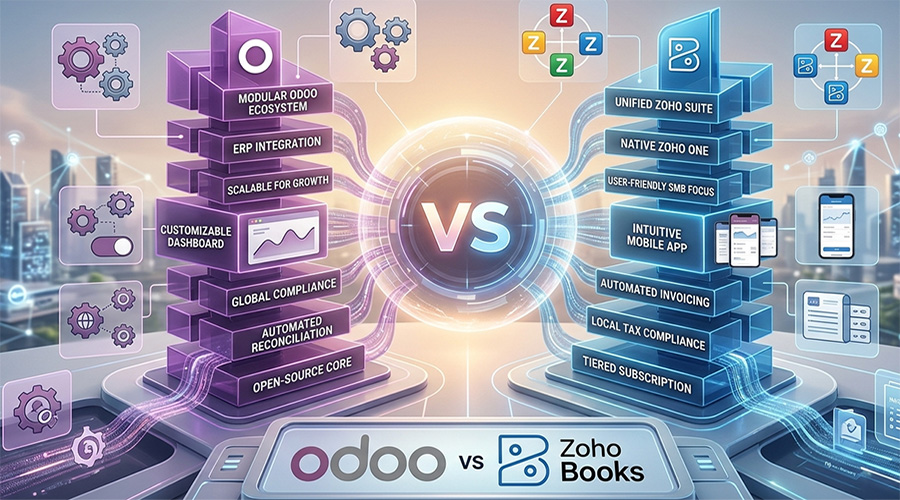
Choosing the right accounting system is not a trivial decision—it directly impacts financial visibility, compliance, and operational efficiency. When comparing Odoo Accounting and Zoho Books, the answer to “which is better” depends less on features alone and more on business context, scale, and strategic direction.
This is not a case of one being universally superior. It is about fit.
Understanding the Core Philosophy
Before diving into features, it’s important to understand how each platform is positioned.
- Odoo Accounting is part of the broader Odoo ecosystem. It’s designed as a modular ERP component, meaning accounting is deeply integrated with inventory, manufacturing, sales, and operations.
- Zoho Books, on the other hand, is a specialized, standalone accounting system within the Zoho suite. It prioritizes usability, compliance, and financial clarity.
This difference alone shapes everything that follows.
Ease of Use and User Experience
If usability is a priority, Zoho Books has a clear advantage.
Zoho Books is built with finance teams and business owners in mind. The interface is clean, intuitive, and requires minimal onboarding. Most users can start managing invoices, expenses, and reports almost immediately.
Odoo Accounting, by contrast, comes with a steeper learning curve. Its interface is powerful but often feels technical—especially for teams without ERP experience. The flexibility is there, but it demands time, setup, and sometimes expert implementation.
Verdict:
- Zoho Books → Better for simplicity and speed
- Odoo Accounting → Better for users comfortable with complex systems
Features and Functional Depth
Both platforms cover essential accounting needs—invoice management, expense tracking, bank reconciliation, and reporting. However, their depth differs in key areas.
Odoo Accounting Strengths
- Tight integration with inventory, manufacturing, and supply chain
- Advanced automation across business processes
- Real-time financial impact from operational activities
- Highly customizable workflows
This makes Odoo particularly strong for product-based or operationally complex businesses.
Zoho Books Strengths
- Strong compliance features (VAT, GST, regional tax support)
- Automated workflows for invoicing and reminders
- Excellent financial reporting and dashboards
- Built-in client portal and collaboration tools
Zoho Books focuses on financial clarity and control, rather than operational depth.
Need Help Implementing Zoho for Your Business?
Choosing the right Zoho applications and configuring them correctly can make a huge difference. Our experts can help you implement Zoho solutions tailored to your business needs.
Get Expert ConsultationIntegration and Ecosystem
Odoo shines when you want a single unified system. Accounting is not isolated—it is part of a broader operational engine. Sales orders, inventory movements, and manufacturing costs flow directly into financial records.
Zoho Books integrates seamlessly within the Zoho ecosystem (CRM, Projects, Inventory), but each app remains independently optimized. This modular approach offers flexibility without overwhelming complexity.
Strategic Insight:
- Choose Odoo if you want ERP-level integration
- Choose Zoho Books if you prefer best-in-class specialized apps
Pricing and Total Cost of Ownership
This is where many businesses miscalculate.
Odoo may appear cost-effective initially, especially with its modular pricing. However, real-world implementations often involve:
- Customization costs
- Implementation partners
- Ongoing maintenance
Zoho Books offers predictable, transparent pricing with minimal setup requirements. For most small to mid-sized businesses, it delivers faster ROI with lower overhead.
Scalability and Business Growth
Odoo is built for scalability—particularly for businesses that anticipate operational complexity, such as manufacturing, logistics, or multi-warehouse environments.
Zoho Books scales well within the SMB segment, but for highly complex operations, businesses may eventually need deeper ERP capabilities.
Compliance and Localization
Zoho Books has a strong reputation for compliance, especially in regions with strict tax regulations. It is continuously updated to align with local laws, making it a safer choice for businesses that prioritize regulatory accuracy.
Odoo can handle compliance, but often requires configuration or localization modules, depending on the region.
Final Verdict
There is no universal winner—but there is a clear strategic distinction.
- Choose Odoo Accounting if your business requires deep integration with operations, inventory, or manufacturing, and you are prepared to invest in setup and customization.
- Choose Zoho Books if you want a reliable, user-friendly, and cost-effective accounting system that delivers strong financial management without complexity.
Expert Recommendation
From a financial strategy perspective, most small and mid-sized businesses benefit more from clarity and control than complexity.
Unless your operations demand ERP-level integration, Zoho Books is often the smarter, more efficient choice. It allows businesses to stay focused on financial performance without being burdened by system overhead.
Odoo becomes compelling when accounting is not just about numbers—but about real-time operational intelligence across the entire business.
Join over 145,000 SEO and Google Ads experts. We provide a community to help you engage and learn from industry experts and influencers. Join Now
World-class digital workplace software for a seamless employee experience, whether you have 10 or 10,000 employees.