Connecting Zoho Books with the Jordanian Income and Sales Tax Department
Originally published: April 09, 2026 08:43:06 AM, updated: May 05, 2026 11:05:36 AM
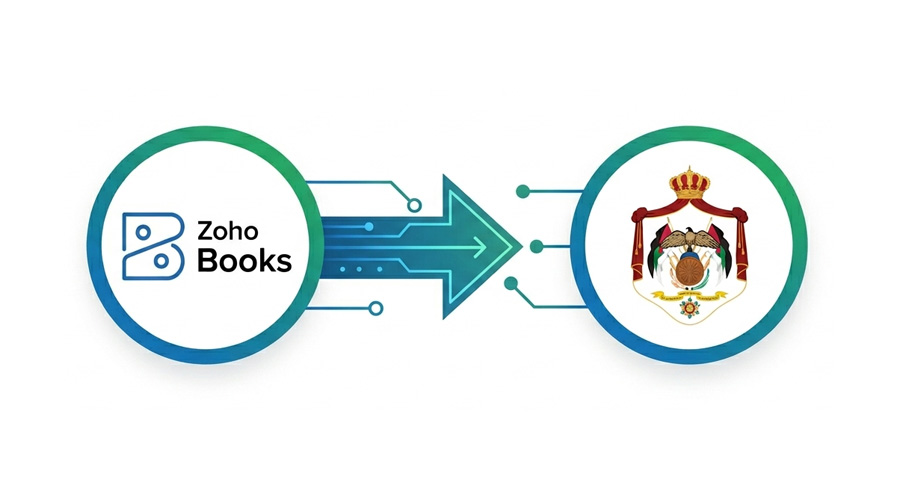
Jordan’s ongoing drive to modernize its tax infrastructure is putting more pressure on businesses to keep accurate financial records, ensure compliance and get ready for a more digitized tax environment. The question now is not whether you will need to integrate with tax authorities if you already use Zoho Books, or are considering it, but how strategically to do it.
In this guide, we’ll take a look at how Zoho Books fits into the Jordanian compliance landscape, what integration with ISTD really looks like today, and how forward-thinking businesses can prepare for a seamless transition.
The Reality: No Native Direct Integration (Yet)
To be frank, there is no official native integration between Zoho Books and ISTD Jordan (JoFotara) right now.
Jordan is still in a transition phase whereas some countries have already mandated real-time e-invoicing systems. The Income and Sales Tax Department has been aggressively pursuing digitization but the infrastructure is not yet fully standardized for direct API based integrations like those in more mature markets.
This means that businesses cannot just ‘connect’ Zoho Books to ISTD by clicking a button.
But this is not a constraint. It is an opportunity to build a smarter, more adaptable financial system.
Need Help Implementing Zoho for Your Business?
Choosing the right Zoho applications and configuring them correctly can make a huge difference. Our experts can help you implement Zoho solutions tailored to your business needs.
Get Expert ConsultationHow Zoho Books Supports Compliance in Jordan
Even without direct integration, Zoho Books already provides a strong foundation for tax compliance in Jordan.
The platform allows businesses to configure VAT (General Sales Tax) rules, generate compliant invoices, and produce detailed financial reports required for tax filing. With proper setup, Zoho Books can mirror the structure expected by ISTD.
For example, companies can:
- Configure tax rates based on Jordanian GST requirements
- Generate audit-ready reports for submissions
- Maintain organized transaction records aligned with ISTD expectations
This means that while submission may not be automated, preparation can be fully streamlined.
Bridging the Gap: Practical Integration Approaches
Forward-looking businesses in Jordan are not waiting for official integrations—they are building their own workflows.
There are three realistic approaches to connecting Zoho Books with ISTD processes:
1. Structured Export and Filing
Exporting financial statements from Zoho Books and manually uploading them to ISTD portals is the most common method today.
This can sound trivial, but when it is done right, it is very efficient. Standardized report formats, automated exports, and a drastic reduction in manual errors are all benefits for companies.
2. Custom API or Middleware Integration
A more sophisticated option is to create a custom middleware layer for larger organizations.
Financial data can be pulled from Zoho Books APIs and fed into systems that meet ISTD submission requirements. This is especially useful for companies that have high transaction volumes.
But this approach needs technical expertise and a clear perception of the changing digital needs of ISTD.
3. Partner-Led Localization
This is where most companies get a competitive advantage.”
Partnering with an experienced Zoho implementation partner allows you to localize Zoho Books for Jordan. The system is not forced into generic workflows but is instead customised from day one to meet ISTD expectations.
This includes invoice structures, tax mapping, reporting formats and approval workflows.
Need Help Implementing Zoho for Your Business?
Choosing the right Zoho applications and configuring them correctly can make a huge difference. Our experts can help you implement Zoho solutions tailored to your business needs.
Get Expert ConsultationWhy Waiting Is a Strategic Mistake
Many businesses believe they can wait until ISTD demands complete integration.
This is not the case.
As regulations tighten, and they will, unprepared companies will find themselves implementing in a rush, with operational disruption and compliance risk.
However, companies that build their accounting systems today will be well positioned to move to direct integration easily when it is available.
In short: preparation is not optional, it is strategic positioning.
Key Considerations Before Implementation
There are some key areas that businesses need to address before they attempt to integrate Zoho Books with ISTD workflows.
First, the financial processes should be well defined. Automatization without clearness results in chaos.
Second, tax parameters should be correct and compatible with Jordanian laws. Even small misconfigurations can lead to the reporting of problems.
Lastly, the internal teams need to be trained. A well configured system is useless if the users do not know how to operate it correctly.
The Bigger Picture: Digital Tax Transformation in Jordan
Jordan is heading for a more transparent and digital tax system. The direction is clear – real-time reporting, e-invoicing and compliance controls.
Zoho Books gets businesses ahead of this curve when implemented correctly.
Rather than waiting for regulatory changes to take effect, companies can be proactive in creating systems that are ready to plug and play as soon as ISTD formalizes its digital infrastructure.
Final Thoughts
Zoho Books integration with the Income and Sales Tax Department is not just one integration; it’s about building a compliant and scalable financial ecosystem.
There may not be any direct link yet, but the tools, APIs and techniques available today are more than enough to fill the gap.
Businesses that stay ahead of the curve will not only ensure compliance, they will gain operational clarity, reduce risk and create a financial system that supports long-term growth in Jordan’s evolving regulatory landscape.
Join over 145,000 SEO and Google Ads experts. We provide a community to help you engage and learn from industry experts and influencers. Join Now
World-class digital workplace software for a seamless employee experience, whether you have 10 or 10,000 employees.