What Every PPC Manager Needs to Know About Click Fraud in 2026
Originally published: March 24, 2026 08:16:02 AM, updated: March 24, 2026 08:18:38 AM
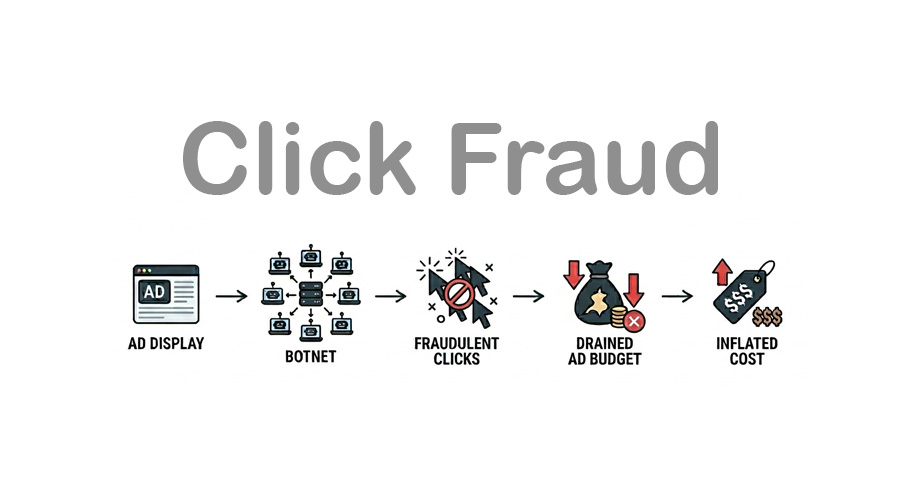
Pay per click advertising remains one of the most powerful levers in digital marketing. It gives businesses direct access to high intent audiences, measurable results, and the ability to scale quickly. But as PPC budgets grow and platforms become more automated, a persistent threat continues to undermine campaign performance from the inside: click fraud.
Click fraud is not new. It has existed as long as the PPC model itself. What has changed is its scale, its sophistication, and the damage it inflicts on campaigns that are increasingly managed by machine learning algorithms. In 2026, the PPC managers who ignore this problem are not just losing money. They are building their entire optimisation strategies on polluted data.
This article covers what click fraud looks like today, why it matters more than ever for PPC professionals, and the practical steps you can take to protect your campaigns and your clients.
The Scope of the Problem in 2026
Click fraud occurs when a person or an automated programme clicks on a paid advertisement without any genuine interest in the product or service being advertised. The click registers in the ad platform, the advertiser is charged, and the visitor either bounces immediately or never interacts with the landing page in any meaningful way.
The sources of click fraud have diversified significantly over the past few years. Bot networks remain the largest contributor, with sophisticated automation tools that mimic real browser environments, rotate through residential IP addresses, and generate human like interaction patterns. Click farms, which employ real people to click ads manually from actual devices, continue to operate at scale in several regions. And competitive click fraud, where rivals deliberately click your ads to exhaust your daily budget, remains a persistent issue in industries with high cost per click rates.
Understanding the real cost of click fraud goes beyond the direct financial waste. Juniper Research projects that global ad fraud losses will surpass $172 billion by 2028. But for PPC managers, the true cost shows up in every metric they track: inflated CPCs, depressed conversion rates, distorted quality scores, and bidding algorithms that learn from tainted data. When you account for all of these downstream effects, the actual business impact is significantly larger than the raw dollar amount lost to fake clicks.
Why PPC Managers Are on the Front Line
If you manage PPC campaigns for a living, click fraud touches every part of your daily workflow. It affects the data you analyse, the optimisation decisions you make, the reports you deliver to clients, and the performance benchmarks you are judged against.
Consider the impact on Smart Bidding. Google’s automated bidding strategies learn from conversion signals to optimise bids in real time. When a share of your click data is generated by bots or click farms, the algorithm incorporates those interactions into its model. It begins to associate certain traffic patterns with your campaign, patterns that include fraudulent characteristics. Over time, the system starts bidding more aggressively for traffic that resembles the bot profile rather than your ideal customer. The result is a gradual decline in lead quality and an increase in cost per acquisition that seems to have no clear cause.
Quality Score is affected as well. When invalid traffic inflates your click through rate but produces abnormally high bounce rates and low engagement, the signals become contradictory. Your ads appear to attract clicks but fail to satisfy user intent. Over time, this can depress your Quality Score, which raises your CPC and reduces your ad rank for the very keywords you are trying to compete on.
For agency PPC managers, the stakes are even higher. When a client sees declining performance and rising costs, they look to their account manager for answers. If you cannot identify click fraud as a contributing factor, you end up defending your strategy against problems that your strategy did not cause. Worse, you might recommend changes that move the campaign further from its real audience because the data you are basing those recommendations on is not clean.
How to Spot Click Fraud in Your Campaigns
No standard PPC dashboard will flag click fraud explicitly, but there are patterns you can learn to recognise with careful analysis.
Start with the gap between clicks and conversions. If your click volume is steady or growing but your conversions are flat or declining, something is diluting your traffic quality. This is the single most common symptom and the one that most managers mistakenly attribute to creative fatigue or landing page issues.
Examine your bounce rate segmented by traffic source. Paid search traffic from relevant keywords should have a bounce rate that is roughly comparable to your organic search traffic. If your paid bounce rate is dramatically higher, a portion of those clicks are likely not genuine.
Look at the geographic distribution of your clicks. If you are running campaigns targeted to specific countries or regions and you see meaningful click volume from locations outside your targeting parameters, that traffic warrants investigation. Some platforms will show clicks from locations that do not match your settings due to VPN usage or proxy networks, both of which are common tools in the click fraud ecosystem.
Monitor your budget pacing. Campaigns that consistently exhaust their daily budget earlier than expected may be under attack from competitors or bots deliberately draining your spend. Compare the pacing on days with high conversion rates against days where conversions are flat but budget runs out early. The difference is often a clue.
Finally, review your Google Ads invalid clicks report. This report shows how many clicks Google identified and filtered before charging you. If the numbers are consistently high for specific campaigns or keywords, it indicates that those areas are being targeted and that additional fraud may be getting through the filter.
Practical Defences You Can Implement Now
There are several layers of defence available to PPC managers, ranging from simple account level adjustments to dedicated fraud prevention technology.
Tighten geographic targeting to match your actual service areas precisely. Avoid using broad or automated location options that can serve ads to users outside your intended regions. The smaller your geographic footprint, the less surface area you expose to fraudulent traffic from irrelevant locations.
Implement ad scheduling to concentrate your spend during hours when your real customers are most active. Analyse your conversion data by hour and day to identify peak windows. Bot activity tends to increase during off peak hours, so pulling back spend during those periods reduces exposure without sacrificing genuine leads.
Build and maintain an IP exclusion list. When your analytics reveal IP addresses that click repeatedly without converting, block them at the campaign level. This is a reactive measure that will not catch sophisticated bots, but it eliminates the most obvious repeat offenders.
Refine your keyword strategy. Broad match keywords cast a wide net that attracts both relevant and irrelevant traffic. Shifting toward phrase match and exact match reduces the volume of low quality queries entering your campaigns. Combine this with aggressive negative keyword management to filter out search terms that attract non commercial clicks.
Set up conversion tracking at multiple funnel stages. Most PPC managers track the final conversion event, but adding micro conversion tracking for scroll depth, button clicks, form field interactions, and time on page gives you a more granular view of traffic quality. Real visitors produce engagement signals across these touchpoints. Bots typically do not.
When You Need More Than Manual Adjustments
Manual defences help, but they have clear limitations. Modern click fraud operates at a level of sophistication that static rules and periodic audits cannot match. Bots that rotate through thousands of residential IPs, emulate real browser environments, and randomise their behaviour will evade IP exclusion lists and geographic blocks with ease.
For PPC managers handling significant spend, either in house or on behalf of clients, dedicated click fraud detection platforms provide a much more robust solution. These tools evaluate every click in real time using machine learning models that analyse hundreds of signals per interaction. Device fingerprints, behavioural patterns, network reputation data, and session level anomalies are all assessed in milliseconds. Invalid clicks are blocked before they cost you money, which means your campaign data stays clean from the start.
The return on investment from these platforms is typically immediate. The money saved by blocking fraudulent clicks exceeds the cost of the software in most cases within the first month. But the longer term value is even greater. When your bidding algorithms train on verified data, they improve progressively. When your retargeting lists contain only real visitors, your remarketing becomes more efficient. When your reports reflect actual human behaviour, the strategic decisions you make based on those reports become sharper and more effective.
Making Traffic Quality Part of Your PPC Workflow
The most effective PPC managers in 2026 will be those who treat traffic quality as a core metric alongside click through rate, conversion rate, and cost per acquisition. Rather than waiting for performance to decline and then investigating, they proactively monitor traffic quality as part of their regular campaign management workflow.
This means including invalid traffic rates in your weekly reporting. It means segmenting campaign performance by verified versus unverified traffic. It means educating clients and stakeholders on the reality of click fraud so that when performance discussions happen, everyone in the room understands the full picture.
For agency teams, offering traffic quality monitoring as part of your PPC management service is a genuine differentiator. Clients want to know that their budgets are protected. Demonstrating that you measure, report on, and actively combat click fraud builds trust and strengthens retention. It also positions you as a partner who goes deeper than surface level optimisation.
The Bottom Line for PPC Professionals
Click fraud is not a marginal issue that only affects certain industries or unusually large budgets. It is a systemic problem that touches every PPC campaign running on every major platform. The managers who acknowledge this and build defences against it will deliver better results, provide cleaner data, and make smarter decisions than those who continue to ignore the invisible tax on their traffic.
Your campaigns may already be performing better than your dashboard suggests. The only way to find out is to separate the real clicks from the fake ones and see what your true metrics look like. Once you do, you will never want to manage a campaign without that visibility again.
Join over 145,000 SEO and Google Ads experts. We provide a community to help you engage and learn from industry experts and influencers. Join Now
World-class digital workplace software for a seamless employee experience, whether you have 10 or 10,000 employees.